크리에이터 광고 vs 브랜드 광고: 2026년 뷰티에서 실제로 전환되는 것은?

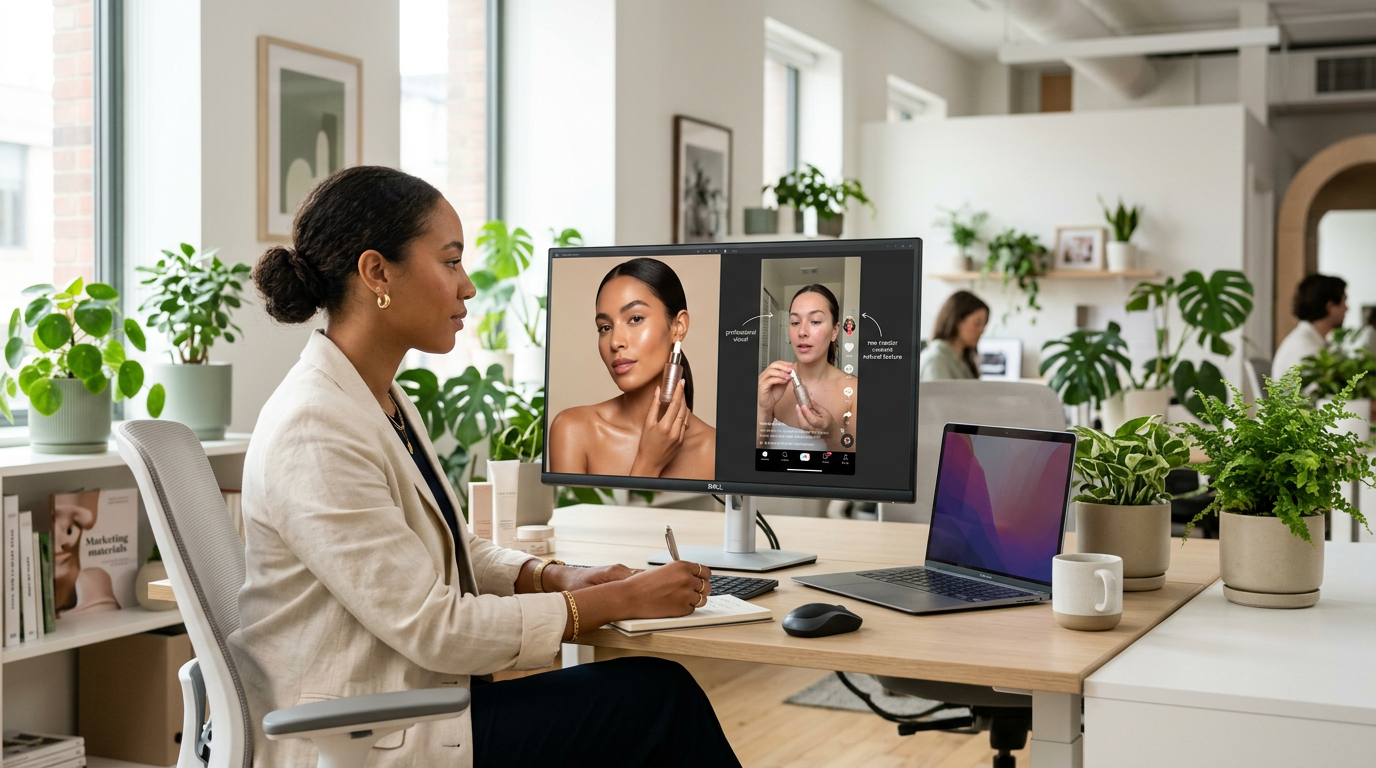
2026년 Meta와 TikTok에 광고를 집행하는 모든 뷰티 브랜드는, 본인이 인지하든 아니든 동일한 크리에이티브 실험을 진행하고 있습니다. 광고처럼 보이는 콘텐츠와 실제 사람의 추천처럼 보이는 콘텐츠 중 어느 쪽의 성과가 더 좋을까요? 답은 거의 항상 같습니다. 크리에이터 주도 콘텐츠는 뷰티 카테고리의 콜드 오디언스 대상에서 정제된 브랜드 크리에이티브 대비 평균적으로 CTR 2~3배, ROAS 25~40% 더 높은 성과를 냅니다. 하지만 브랜드 크리에이티브가 승리하는 특정 상황도 분명히 존재합니다. 그 차이를 아는 것은 실제 매출과 직결됩니다.
이러한 변화는 2023년부터 가속되어 왔습니다. 광고 포화도가 높아지면서, 정제된 브랜드 콘텐츠에 대한 소비자의 신뢰는 떨어졌습니다. "너무 잘 만들어졌다, 광고다, 넘겨야겠다"는 인지적 지름길이 그 어느 때보다 빠르게 작동합니다. 크리에이터 콘텐츠가 그 필터를 우회할 수 있는 이유는, 또래의 진정성 있는 추천처럼 읽히기 때문입니다. 이는 뷰티 카테고리에서 가장 강력한 단일 구매 동인입니다.
문제: 브랜드들은 각 목적에 맞지 않는 크리에이티브를 사용하고 있습니다
가장 흔한 실수는 한 포맷을 선택하느냐 마느냐가 아니라, 포맷을 목적에 맞추지 못하는 것입니다. 크리에이터 콘텐츠는 퍼널 단계마다 다르게 작동합니다. 브랜드 크리에이티브가 죽은 것은 아니며, 단지 그 역할이 명확할 뿐입니다. 정제된 브랜드 영상을 콜드 오디언스에 집행하는 것은 뷰티 광고에서 가장 비싼 크리에이티브 실수 중 하나입니다. 아직 신뢰를 얻지 못한 오디언스에게 비진정성 신호를 보내기 때문입니다. 반대로 과거 구매자로 구성된 리타겟팅 오디언스에 가공되지 않은 UGC를 사용하는 것은, 브랜드 프리미엄을 강화할 수 있는 한 단계 격상된 무언가를 보여줄 기회를 놓치는 것입니다.
두 번째 문제는 측정입니다. 브랜드들은 종종 크리에이터와 브랜드 크리에이티브를 ROAS로 정면 비교하고는 한쪽이 "효과 없다"고 결론짓습니다. ROAS는 전체 성과를 보는 데는 유용하지만, 퍼널 단계별 크리에이티브 효과를 구분하기에는 부적절한 지표입니다. 적절한 지표는 인지 캠페인의 경우 훅 레이트(hook rate), 홀드 레이트(hold rate), 클릭률이며, 이미 브랜드를 인지하고 있는 트래픽에는 전환율입니다.
크리에이터 광고가 승리할 때 (대부분의 경우)
크리에이터 주도 콘텐츠는 세 가지 시나리오에서 기본 승자입니다. 첫째, Meta와 TikTok에서의 콜드 오디언스 프로스펙팅입니다. 누군가가 처음 브랜드를 접할 때, 실제 사람의 솔직해 보이는 추천이 브랜드가 자기 자신을 주장하는 것보다 훨씬 높은 신뢰감을 줍니다. 인지적 부하는 더 낮고, 신뢰 신호는 더 높으며, 스킵률은 현저히 낮습니다.
문제-해결형 콘텐츠도 마찬가지입니다. 크리에이터가 제품 사용 전 본인 피부와 3주 사용 후의 피부를 보여주는 것은, 브랜드 크리에이티브로는 거의 만들 수 없는 스토리입니다. 진정성이 필요하기 때문입니다. 시청자는 브랜드가 브랜드 광고에 들어가는 모든 것을 통제한다는 사실을 압니다. 하지만 크리에이터가 자신의 피부를 통제한다고는 생각하지 않습니다.
퍼널 상단 교육 콘텐츠도 그렇습니다. 성분 설명, 스킨케어 루틴 안내, "이 세럼이 지성 피부에 맞나요?" 같은 질문에 답하는 콘텐츠는 크리에이터 주도일 때 가장 좋은 성과를 냅니다. 질문-답변 형식이 실제 조언을 구하는 행동을 모방하기 때문입니다. 크리에이터 주도 교육 콘텐츠는 뷰티 카테고리에서 브랜드 제작 콘텐츠 대비 3~4배 높은 인게이지먼트율을 기록합니다. 발표가 아닌 대화처럼 느껴지기 때문입니다.
브랜드 크리에이티브가 승리할 때
브랜드 크리에이티브가 크리에이터 콘텐츠를 능가하는 세 가지 역할이 있습니다. 첫째, 월 오디언스 리타겟팅입니다. 이미 사이트를 방문했거나 브랜드와 상호작용한 사용자는 품질과 프리미엄 포지셔닝을 강화하는 한층 정제된 콘텐츠에 더 잘 반응합니다. 텍스처, 패키징, 포뮤라 품질을 보여주는 러셔리 브랜드 영상은, 이미 관심을 보인 사람에게는 UGC보다 더 좋은 성과를 냅니다. 브랜드 제작 리타겟팅 크리에이티브는 제품 페이지를 방문했지만 구매하지 않은 오디언스 대상에서 UGC 대비 30~45% 높은 전환율을 보입니다.
둘째, 신제품 출시 발표입니다. 신제품 론칭은 브랜드 격상을 전달하는 정제된 "리빌(reveal)" 모먼트로부터 큰 이득을 얻습니다. 신제품의 첫인상이 그 인지 가치를 결정합니다. UGC는 특히 고가 SKU에서 프리미엄 포지셔닝을 전달하기 어려울 수 있습니다.
셋째, 이메일입니다. 이메일 오디언스는 이미 브랜드 구독자입니다. 옥트인했고, 신뢰합니다. 이 맥락에서는 고품질 제작 크리에이티브가 UGC와 비슷하거나 더 높은 성과를 냅니다. 신뢰 변수가 이미 해결된 상태이기 때문입니다.
크리에이터 vs. 브랜드 크리에이티브 믹스를 구성하는 4가지 방법
1. 콜드 트래픽에는 80/20 법칙을: 콜드 오디언스에는 크리에이터 콘텐츠 80%, 브랜드 콘텐츠 20%로 운영하십시오. 20%의 브랜드 크리에이티브는 크리에이티브 다양성 테스트와 알고리즘이 브랜드의 최고 품질 자산에 노출되도록 하는 역할을 합니다. 잘된다고 해서 100% 크리에이터로 가지 마십시오. 품질 크리에이티브가 만들어내는 브랜드 리프트는 ROAS가 포착하지 못하는 장기적 가치를 가집니다. 80/20 분배는 일반적으로 가장 강력한 블렌디드 ROAS를 만듭니다. 페이드 소셜에 월 5만 달러 이상 집행하는 뷰티 브랜드의 경우 특히 그렇습니다.
2. 리타겟팅을 크리에이티브 유형별로 세그먼트하십시오: 퍼널 상단 리타겟팅(사이트 방문, 영상 시청)에는 크리에이터 콘텐츠를 운영하십시오. 퍼널 하단 리타겟팅(제품 페이지 조회, 장바구니 추가, 결제 시작)에는 브랜드 크리에이티브를 운영하십시오. 퍼널이 깊어질수록, 크리에이티브는 더 정제되고 제품 중심적이어야 합니다.
3. Spark Ads로 두 세계를 연결하십시오: 크리에이터 영상이 오가닉으로 좋은 성과를 낼 때, 이를 Spark Ad로 전환하면 크리에이터 콘텐츠의 진정성과 브랜드 광고의 타겟팅 정밀도를 동시에 얻을 수 있습니다. 이는 2026년 TikTok에서 뷰티 브랜드가 활용할 수 있는 가장 효율적인 포맷입니다. 별도 콘텐츠를 제작하지 않고도 크리에이터 신뢰 신호와 페이드 리치를 모두 얻을 수 있습니다.
4. 동일 오디언스에 브랜드 vs. 크리에이터를 정면 테스트하십시오: 분기당 최소 한 번은 통제된 테스트를 진행하십시오. 동일 오디언스, 동일 예산, 브랜드 크리에이티브 1개 vs. 크리에이터 크리에이티브 1개로 7일간 운영합니다. 훅 레이트, CTR, CPC를 추적하십시오. 결과는 크리에이티브 전략을 정교하게 만들고, 자신만의 브랜드에 어떤 포맷이 통할지에 대한 선입견을 깨뜨릴 것입니다. 대부분의 브랜드는 크리에이터 콘텐츠가 자신들이 예상한 것보다 더 큰 차이로 이긴다는 사실을 확인하며, 그 결과는 여러 차례의 테스트에서도 일관되게 유지됩니다.
먼저 무엇을 만들어야 하는가
Meta나 TikTok에 광고비를 쓰면서 크리에이터 콘텐츠를 본격적으로 테스트해보지 않았다면, 거기서 시작하십시오. 크리에이터 영상 5개를 확보해, 동일 예산으로 콜드 오디언스에 자사 최고의 브랜드 크리에이티브와 10일간 맞붙이고, 데이터가 말하게 하십시오. 결과는 다음 크리에이티브 투자 결정을 명확하게 만들어줄 것입니다.
2026년 가장 효율적인 페이드 소셜 프로그램을 구축하는 브랜드들은 크리에이터냐 브랜드냐를 선택하지 않습니다. 두 가지 모두를 적절한 시점, 적절한 자리에 사용합니다. 그 명확함은 대부분의 브랜드가 아직 발견하지 못한 경쟁 우위입니다.
Veilup은 코스메틱과 스킨케어 브랜드가 크리에이티브 믹스 전반을 구축하고 최적화하도록 돕습니다. 크리에이터 소싱과 브리핑부터 브랜드 영상 제작과 페이드 미디어 전략까지 함께합니다. 크리에이티브 프로그램에 전략적 정비가 필요하다면, 이미 그 전문성은 여기에 있습니다.
더 많은 인사이트


.png)